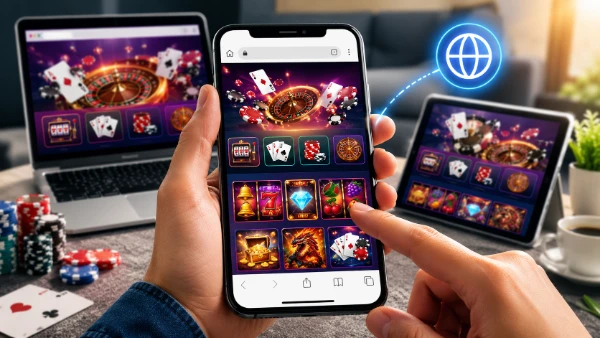

Fake Casino Broadcasts: How to Spot a Deepfake Dealer or Fraudulent Stream
A casiever happened in the way viewers are led to believe. A fraudster may replay an old live-casino feed, replace a dealer’s face or voice, imitate a recognised streamer, alter the balance shown on screen, or attach a genuine-looking video to a false casino link. By 2026, realistic synthetic video is cheap enough that obvious visual glitches are no longer guaranteed, while ordinary compression can make a genuine broadcast look strange. The safest approach is therefore not to judge authenticity from one facial detail. Viewers should check the identity behind the channel, the casino domain, the licence record, the history of the broadcast and the purpose of every link before registering, depositing or sharing personal data.
What Fake Casino Streams Look Like in 2026
The phrase “fake casino stream” covers several different forms of deception. The simplest is a replay presented as a live broadcast, often with a fresh “LIVE” graphic, an artificial viewer count and automated chat messages. Another version uses real footage but changes the context: a demonstration balance is described as the streamer’s own money, a large win is cut from an older session, or losses are removed so that the account appears consistently profitable. A more advanced operation may copy the layout, profile picture and name of a known casino creator, then direct viewers to a lookalike website. In each case, the video is mainly a trust-building device. The criminal does not need to fabricate every card, roulette result or dealer movement if genuine footage can be reused to make a false offer appear credible.
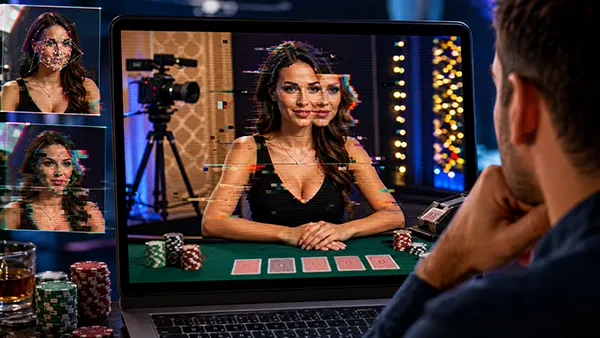
A deepfake dealer is a narrower type of fraud. Artificial intelligence can replace a real dealer’s face, generate a new face over an existing body, clone a voice or create short responses that appear to address the audience. The same methods can be used to impersonate a streamer, casino representative, celebrity or customer-support agent. Some fakes are fully generated, but many are composites: the table, hands and cards come from a genuine recording, while the face, speech, branding or call to action is altered. This matters because viewers often look for one dramatic error across the whole picture. In practice, only a small part of the broadcast may be false, and that small part may contain the instruction to scan a QR code, use a particular registration address or transfer money outside the casino cashier.
The quality of synthetic media has improved, but automated detection is not a certainty. A March 2026 UK government study described deepfake detection as an early-stage field and mapped 59 specialist suppliers worldwide, many focused on fraud prevention and identity checks. Europol’s 2026 cybercrime assessment also treats artificial intelligence as an expanding criminal enabler rather than a distant possibility. For an ordinary viewer, this means a browser extension or “AI detector” should not be treated as a final verdict. Such tools may flag genuine video after heavy compression, subtitles, resizing or poor lighting, and they may miss a carefully produced fake. Reliable judgement comes from combining what can be seen and heard with checks that happen outside the broadcast itself.
The Most Reliable Warning Signs
Visual and audio faults still matter, but they should be treated as prompts for further checking rather than proof. Watch the face during fast head turns, when a hand passes across the mouth, when glasses catch light or when the dealer looks down at the table. A false face may briefly lose its edge, change skin texture, distort teeth, misplace reflections or move differently from the neck and ears. Cloned speech may have flattened emotion, unusual breathing, repeated cadence or small lip-sync delays. Yet the same symptoms can be caused by low bandwidth, frame interpolation, noise reduction or a badly configured webcam. A genuine live dealer filmed through several layers of screen capture can look less natural than a carefully generated fake, so a single frozen smile or blurred jawline is never enough on its own.
Continuity is usually more revealing than appearance. Note the table name, round number, shoe progress, visible clock, dealer change, chip balance and recent results, then check whether they move forward logically. A loop may repeat the same background movement, hand gesture, card sequence, chat reaction or camera fault at identical intervals. A supposed live host may answer generic comments while ignoring time-specific questions, or refer to a promotion that ended months earlier. There is an important caveat: a dealer working in a live-casino studio normally follows the game and the casino’s own table chat, not comments posted on an external video service. Failure to answer a YouTube or Twitch message does not establish fraud. The stronger sign is a collection of contradictions between the claimed date, game state, spoken comments and verifiable events.
The clearest warnings often appear around money rather than pixels. Treat the broadcast as high risk when a prize requires an advance payment, a “special balance” can be activated only by sending cryptocurrency to a personal wallet, or support asks for a password, one-time code, card PIN, recovery phrase or remote access to a device. Be equally cautious with countdowns, guaranteed-profit claims, private messages offering to recover losses and instructions to leave the official cashier. A copied chat can add social pressure through repetitive claims that withdrawals arrived instantly or that a limited bonus is about to close. Large viewer numbers and a busy comment column are not proof of popularity because automated accounts can inflate both. A normal affiliate link is not automatically fraudulent, but the destination, licence status and commercial relationship still need independent checking.
How to Verify a Dealer, Streamer and Casino
Begin with the person or organisation claiming responsibility for the broadcast. Open the casino’s or creator’s known website from a bookmark, a typed address or a trusted search result rather than from the video description. Look for a link to the official video channel and compare the handle character by character. Fraudulent accounts frequently use an extra hyphen, substituted letter, misleading subdomain or copied verification image. Review the channel’s history as a whole: long-term publishing patterns, earlier broadcasts, community posts, changes in subject matter and links used over time are harder to imitate consistently than a profile picture. A verification badge can add confidence, but it is not a substitute for this cross-check because accounts can be compromised and visual badges can be copied inside the video frame.
Next, verify the gambling business separately from the streamer. A legitimate-looking logo, studio and game title do not prove that the linked website is licensed where the viewer lives. Check the legal company name, licence number and exact domain against the public register of the relevant regulator. In Great Britain, licensed businesses must display their licensed status and link to the Gambling Commission register, which lists trading names, approved domains, permitted activities and current licence status. The domain in the register should match the address you intend to use, not merely resemble the brand name. A licence from another jurisdiction may be genuine but still may not authorise the business to target customers in your country. Missing company details, an unverifiable licence seal or a footer image that does not lead to an official record should stop the process.
Then test the claim being made about the game. Search the casino’s official lobby for the stated title and provider, and compare table names, limits, interface elements and recent game information where available. If a streamer claims to be playing a live table at that moment, open the same table through the verified casino account without using the broadcast link. Dealer rotation, round timing and visible table identifiers may help confirm that the feed is current, although regional lobbies and transmission delay can create harmless differences. For prerecorded slot content, use a screenshot search to see whether the same “live” win appeared in an older upload. Also check whether the video clearly distinguishes real-money play, demonstration mode, sponsored funds and edited highlights. A genuine game can still be presented dishonestly if the financial context is concealed.
A Five-Minute Verification Routine Before You Click or Deposit
For the first minute, do nothing requested by the broadcast. Do not scan the QR code, copy a wallet address, install an app or follow a shortened link. Open a separate browser tab and reach the named casino through a saved bookmark or the regulator’s register. Confirm the exact spelling of the domain, including the ending after the final dot, and check that the connection is encrypted. Encryption only protects data in transit; it does not prove that the business is honest, so the licence and legal-entity checks remain essential. Search the official site for the promotion, event or streamer partnership being advertised. If the offer exists only in a video description, a private chat or a newly created social account, treat it as unverified.
During the next two minutes, inspect the channel and the recording. Compare the handle with links published by the casino or creator, read several older posts and note whether the account suddenly changed language, topic or destination address. Check the upload date, live indicator, description edits and any label stating that realistic content was generated or altered with artificial intelligence. YouTube requires disclosure for realistic synthetic or meaningfully altered material and prohibits harmful impersonation, but a missing label does not certify authenticity because a dishonest uploader may ignore the rule. Twitch also restricts links and affiliate codes for sites containing slots, roulette or dice, and it blocks broadcasts from named gambling sites that fail its safety criteria. Content remaining online may simply not have been reviewed yet.
Use the final two minutes to look for consistency and motive. Compare the spoken date with the calendar, the promotion terms with the official offer, the claimed dealer with the current table and the support contact with details published by the licensed operator. Search a distinctive sentence from the title or description to find copied versions. Read the comments for natural disagreement and specific conversation rather than identical praise, but remember that quiet or moderated chat can be legitimate. Most importantly, ask what action the broadcaster wants immediately. A request to deposit through an unfamiliar route, reveal security information, move to an encrypted messenger or pay a release fee creates a risk that no visual quality can cancel. If any key fact remains uncertain, close the link and return through a verified route later.
What to Do If the Stream Is Fake or You Have Already Paid
If you identify a likely fake, preserve useful evidence before the content disappears. Record the full video address, channel handle, profile name, date, local time and relevant timestamps. Take screenshots of the false claim, payment request, QR code, destination domain, wallet address and chat message that directed you there. Save transaction references, emails and support conversations, but do not post identity documents, card details or recovery phrases publicly. Report both the individual broadcast and the account through the video service’s fraud, scam or impersonation route. YouTube permits reports against channels that copy another person or organisation, including unauthorised use of an AI-generated likeness or voice. Avoid arguing with the operator or announcing that evidence has been collected, as this can prompt deletion, further pressure or attempts to move the conversation elsewhere.
If money or account access is involved, act through trusted contact details. Call the bank or card issuer using the number on the card or its official website, explain that the payment followed an impersonation or gambling scam, and ask what protective steps are available. A transfer, card payment and cryptocurrency transaction have different recovery options, so provide accurate times and references without assuming that reversal is guaranteed. Change affected passwords from a clean device, end other active sessions and enable multi-factor authentication. If you installed software, browser extensions or mobile applications supplied by the broadcaster, disconnect the device from sensitive accounts and run security checks based on the device maker’s official guidance. Anyone who later promises guaranteed recovery for an upfront fee should be treated as a second possible fraudster.
Reporting routes depend on location. In Great Britain, concerns about an unlicensed gambling business can be sent to the Gambling Commission, while the public register can confirm whether the operator and domain are authorised. For fraud and cybercrime in England and Wales, Report Fraud replaced Action Fraud from 4 December 2025 and is the national reporting service in 2026; reports can be made online or by calling 0300 123 2040. Victims in Scotland should contact Police Scotland, and an immediate threat should be reported to emergency services. Elsewhere, contact the national gambling regulator, cybercrime reporting centre or police service for the country in which the loss occurred. Give each organisation the same organised evidence set so that the video account, payment route, website and operator identity can be connected.
Building Safer Viewing Habits
The most useful long-term habit is to separate entertainment from verification. A stream can show how a game looks, how quickly rounds run or how a presenter reacts, but it cannot by itself prove that the linked casino is licensed, that displayed funds belong to the streamer or that withdrawals are available on the stated terms. Treat on-screen balances and win histories as claims until confirmed through independent records. Use official bookmarks for casinos you already know, and avoid registration routes sent through unsolicited private messages. When watching an unfamiliar creator, look at several sessions rather than one spectacular clip. Honest content normally includes ordinary losses, technical interruptions, clear sponsorship information and conditions that can be checked outside the recording.
Basic account controls reduce the damage if a convincing fake succeeds. Use a unique password for each casino and email account, enable multi-factor authentication, and never approve a login request that you did not initiate. Set deposit and time limits through the verified casino account rather than following instructions from a streamer. Do not share a screen while banking, reveal identity documents in an open chat or permit remote control of a phone or computer for “verification”. Keep operating systems, browsers and security software updated, and review installed extensions periodically. These measures do not identify a deepfake directly, but they prevent a deceptive video from becoming unrestricted access to money, email, saved cards and personal records.
In 2026, polished production is not evidence of authenticity, and a visual glitch is not evidence of fraud. The stronger method is a chain of independent checks: confirm the channel through a known source, confirm the casino through the regulator, confirm the domain exactly, confirm the offer on the official site and reject any payment route that bypasses normal account controls. Add continuity checks for the broadcast and preserve evidence when something does not match. This approach works against crude replays, copied creators, altered balances, cloned voices and high-quality synthetic dealers because it tests the surrounding facts rather than asking the video to prove itself. When identity, licence or payment details cannot be verified, the safe decision is not to click, register or deposit.